
Use AI where it removes delay, not responsibility.
Dooriax maps repeatable work, data access, approvals, failure states, and human escalation before automating a step. The goal is faster, more consistent operations without hiding important decisions inside a black box.
- Workflow before tool selection
- Human review where judgment matters
- Failure and escalation paths documented
AI workflow automation uses rules, integrations, and language models to assist repeatable business tasks such as intake, classification, drafting, routing, and record updates. Dooriax applies it only after the source data, approved action, responsible person, and exception path are clear.
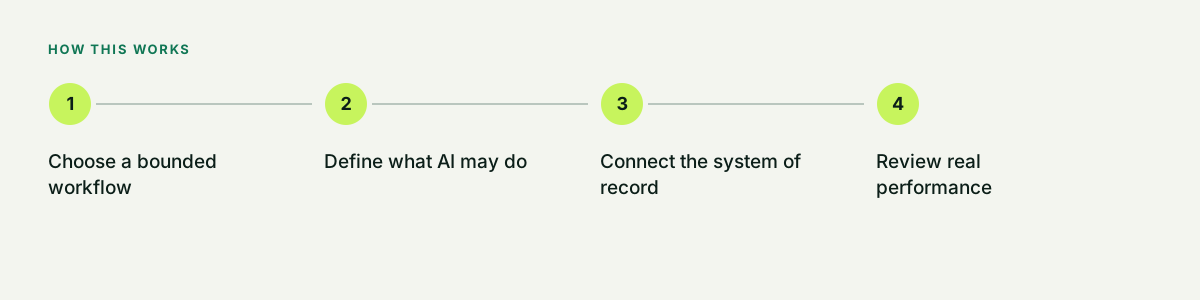
Choose a bounded workflow
The strongest starting point is a frequent task with clear inputs and an observable outcome. Vague goals such as automate sales are broken into specific steps that can be tested.
- Lead intake and routing
- Missing-information requests
- Approved response drafting
- Internal summaries and task creation
Define what AI may do
Each workflow needs explicit boundaries. Dooriax documents whether AI may classify, draft, recommend, update, or send, and what requires approval.
- Allowed actions
- Required approvals
- Sensitive data rules
- Escalation triggers
Connect the system of record
An automation should not create another hidden database. Important events and outputs need to return to the CRM or approved business system with an owner and timestamp.
- Source and destination fields
- Duplicate prevention
- Audit information
- Retry and failure handling
Review real performance
A working demo is not the finish line. The team should review accuracy, time saved, exceptions, customer impact, and whether the workflow still matches policy.
- Sample-based quality review
- Exception volume
- Response and completion time
- Version and policy changes
Common questions.
Direct answers about fit, process, limits, and next steps.
Can AI send messages to every lead automatically?
Automated sending should only be enabled when consent, content approval, timing, platform rules, ownership, and escalation are defined. Some workflows should remain draft-only.
Does Dooriax build autonomous agents?
Dooriax can scope agent-like workflows, but the implementation must still define tools, permissions, limits, monitoring, and human responsibility.
Will automation replace staff?
The work is designed around removing repetitive delay and improving information flow. Staffing decisions remain with the business, and workflows keep responsibility visible.
Build the next useful part of the system.
Bring the current tools, operating bottleneck, market, timing, and outcome. Dooriax will start with the facts.